


Last Updated: May 2026
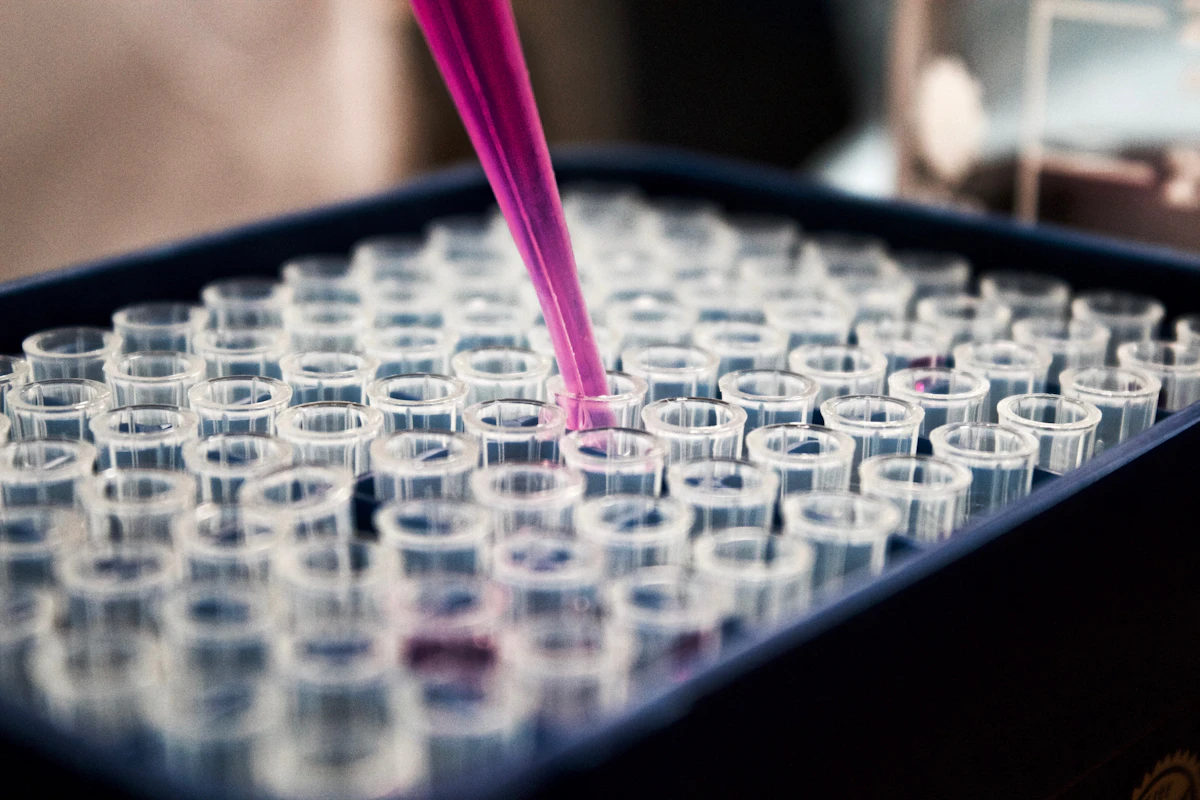
The CBSE Class 12 Chemistry Aldehydes Ketones Carboxylic Acids 2027 chapter (Chapter 8 in the new NCERT 2024-revised textbook, Chapter 12 in the older edition) is one of the highest-scoring units in Organic Chemistry — typically worth 8 to 10 marks in the Class 12 board examination and a near-certain source of one full case-based or long-answer question. This guide walks you through every NCERT in-text question, every exercise problem, the IUPAC nomenclature rules, the four pillar-reactions you must memorise, and 10 board-pattern MCQs for self-assessment.
Chapter Overview — Where This Sits in the 2027 Syllabus
Aldehydes, ketones and carboxylic acids form the third functional-group block in the Class 12 organic-chemistry sequence — after Haloalkanes/Haloarenes (Ch 6) and Alcohols, Phenols and Ethers (Ch 7). The chapter introduces the carbonyl group (>C=O) as the common structural motif of aldehydes (R-CHO) and ketones (R-CO-R’), and the carboxyl group (-COOH) for carboxylic acids. CBSE’s 2026-27 syllabus weight for this chapter is 7 marks within the 28-mark Organic Chemistry block (Chapters 6, 7, 8, 9, 10) of the 70-mark theory paper.
NCERT Exercise vs Board Frequency Map
| NCERT Section / Topic | Pages (NCERT 2024) | Board Frequency (last 5 years) | Weight |
|---|---|---|---|
| IUPAC Nomenclature of Aldehydes/Ketones/Acids | 207-211 | Every year | 1-2 marks |
| Preparation of Aldehydes (Rosenmund, Stephen, DIBAL-H) | 212-214 | 4 of 5 years | 2-3 marks |
| Preparation of Ketones (Friedel-Crafts acylation, from acid chloride) | 214-215 | 3 of 5 years | 2 marks |
| Nucleophilic Addition Reactions (HCN, NaHSO3, alcohol, NH3-derivatives) | 218-221 | Every year | 3 marks |
| Aldol & Cross-Aldol Condensation | 222-223 | Every year | 2-3 marks |
| Cannizzaro Reaction (HCHO, no alpha-H) | 223 | 4 of 5 years | 2 marks |
| Tollens, Fehling, Benedict — Distinguishing tests | 224 | Every year | 2 marks |
| Carboxylic Acid Acidity & pKa Order | 229-230 | 3 of 5 years | 2 marks |
| HVZ Reaction (Hell-Volhard-Zelinsky) | 233 | 2 of 5 years | 1-2 marks |
| Decarboxylation & Kolbe’s Electrolysis | 233 | 3 of 5 years | 1-2 marks |
IUPAC Nomenclature — The 30-Second Rules
Aldehydes: drop the "-e" from the parent alkane and add "-al". Numbering starts from the CHO carbon, which is always C-1. Example: CH3-CH2-CH2-CHO is butanal. Ketones: drop "-e" and add "-one". Number the chain to give the carbonyl carbon the lowest locant. Example: CH3-CO-CH2-CH3 is butan-2-one. Carboxylic Acids: drop "-e" and add "-oic acid". -COOH carbon is always C-1. Example: CH3-CH(CH3)-COOH is 2-methylpropanoic acid. For dicarboxylic acids, retain the "-e" and add "-dioic acid": HOOC-CH2-COOH is propanedioic acid (malonic acid).
NCERT Exercise Solutions — Selected Key Problems
Q 8.1 (Old edition Q 12.1) — IUPAC names
(i) CH3CO(CH2)4CH3 = heptan-2-one. (ii) CH3CH2CHBrCH2CH(CH3)CHO = 4-bromo-3-methylhexanal. Wait — recount: CHO is C-1, then CH(CH3) = C-2 with a methyl, then CH2 = C-3, CHBr = C-4, CH2 = C-5, CH3 = C-6 → so the methyl is on C-2 and Br is on C-4. The correct IUPAC name is 4-bromo-2-methylhexanal. (iii) CH3CH=CHCHO = but-2-enal. (iv) CH3COCH2COCH3 = pentane-2,4-dione.
Q 8.4 — Carbonyl reactivity order toward HCN
Reactivity order for nucleophilic addition: HCHO > CH3CHO > CH3COCH3 > (CH3)2CHCOCH(CH3)2. Reasoning: as alkyl groups (which are +I donors and also create steric crowding) increase around the carbonyl, both the electrophilicity of the carbonyl carbon decreases AND the steric hindrance to the incoming nucleophile increases — so reactivity drops.
Q 8.6 — Distinguishing Pairs
(i) Propanal vs Propanone: Tollens’ test — propanal gives silver-mirror, propanone does not (Tollens distinguishes aldehydes from ketones). (ii) Acetophenone vs Benzophenone: Iodoform test (NaOH + I2). Acetophenone (CH3-CO-C6H5) has the methyl-ketone fragment and gives yellow CHI3 precipitate; benzophenone (C6H5-CO-C6H5) does not. (iii) Phenol vs Benzoic acid: NaHCO3 test — benzoic acid liberates CO2 (effervescence), phenol does not.
Q 8.10 — Aldol Condensation Product
Two molecules of acetaldehyde (CH3CHO) under dilute NaOH give 3-hydroxybutanal (CH3-CH(OH)-CH2-CHO), the "aldol". On heating with loss of water, it gives but-2-enal (crotonaldehyde, CH3-CH=CH-CHO). Mechanism: the alpha-H is abstracted by base, the resulting carbanion attacks the carbonyl carbon of a second aldehyde molecule.
Q 8.16 — pKa Order of Carboxylic Acids
Lower pKa = stronger acid. Order from strongest to weakest acid: F-CH2-COOH (2.66) > Cl-CH2-COOH (2.86) > Br-CH2-COOH (2.90) > CH3-COOH (4.76). The halogen’s -I effect stabilises the conjugate carboxylate base; F has the strongest -I, hence the strongest acid.
Key Formulas and Reactions to Memorise
- Rosenmund Reduction: RCOCl + H2 / Pd-BaSO4 → RCHO. Used to make aldehydes from acid chlorides without over-reduction to alcohols.
- Stephen Reaction: RCN + SnCl2/HCl, then H2O → RCHO. Nitrile to aldehyde via imine intermediate.
- DIBAL-H: reduces nitriles or esters to aldehydes (one H delivered, then water hydrolyses the imine/hemiacetal).
- Clemmensen Reduction: >C=O + Zn-Hg / conc. HCl → >CH2 (carbonyl to methylene under acidic conditions).
- Wolff-Kishner Reduction: >C=O + NH2-NH2 / KOH, ethylene glycol, heat → >CH2 (carbonyl to methylene under basic conditions).
- Cannizzaro Reaction: 2 HCHO + conc. NaOH → HCOONa + CH3OH. Disproportionation of aldehydes lacking alpha-H.
- HVZ Reaction: R-CH2-COOH + Cl2 / red P → R-CHCl-COOH + HCl. Alpha-halogenation of carboxylic acids.
- Kolbe’s Electrolysis: 2 RCOONa + 2 H2O → R-R + 2 CO2 + 2 NaOH + H2 (at electrodes). Used to make symmetric alkanes.
- Tollens’ Reagent: [Ag(NH3)2]+ OH-. Aldehyde + Tollens → silver mirror + carboxylate. Negative for ketones.
- Iodoform Reaction: CH3-CO-R + I2 / NaOH → CHI3 (yellow precipitate) + RCOONa. Positive for methyl ketones, ethanal and CH3-CH(OH)-R alcohols.
Acidity Order — Why Carboxylic Acids Are Acidic
The carboxylate anion (RCOO-) is stabilised by resonance over two equivalent O atoms — both C-O bonds become equal length (1.27 Å). This delocalisation is absent in alcohols (RO-). Hence carboxylic acids (pKa ~4-5) are stronger acids than alcohols (pKa ~16-18). Effect of substituents: Electron-withdrawing groups (-NO2, -CN, halogens) increase acidity by stabilising the carboxylate. Electron-donating groups (-CH3, -NH2 in para position of aromatic acids) decrease acidity. Ortho effect: all ortho-substituents (regardless of electronic nature) increase the acidity of benzoic acid due to steric inhibition of resonance between the -COOH and the ring.
Internal Resources for Class 12 Chemistry 2027
- Ready For Boards Class 12 Chemistry course — chapter-wise lectures, NCERT solutions, sample papers
- CBSE 2027 hub — Class 10 and Class 12 syllabi, pattern, sample papers
- Free resources — formula sheets, previous-year board papers, quick-revision notes
- CBSE FAQ — exam pattern, marking scheme, practical exam guidelines
- Sample papers — Class 12 Chemistry 2027 board-pattern model papers
Common Errors That Cost Marks
The first is mixing up Tollens’ and Fehling’s reagents. Tollens’ uses Ag+ in ammoniacal solution (silver mirror); Fehling’s uses Cu2+ in sodium tartrate (red Cu2O precipitate). Both detect aldehydes, but Fehling’s is negative with aromatic aldehydes (like benzaldehyde). The second is the iodoform test — students forget that ethanol (CH3CH2OH) also gives iodoform because oxidation by NaOI generates ethanal first, which has the methyl-ketone-like fragment after enolisation. The third is mechanism direction in aldol condensation — the alpha-H is on the alpha-carbon (one carbon adjacent to the carbonyl), not on the carbonyl carbon itself. The fourth is forgetting that Cannizzaro requires aldehydes with NO alpha-H (formaldehyde, benzaldehyde, 2,2-dimethylpropanal). Aldehydes with alpha-H undergo aldol condensation in the same conditions, not Cannizzaro.
10 Board-Pattern MCQs (Self-Test)
Practice Quiz — 10 CLAT-Style Questions
Click an option to reveal the answer and explanation.
FAQ — CBSE Class 12 Chemistry Aldehydes Ketones Carboxylic Acids 2027
How many marks does this chapter carry in CBSE Class 12 Boards?
Approximately 7 marks in the 70-mark theory paper, distributed as 1 MCQ (1 mark) + 1 short-answer (2-3 marks) + 1 long-answer or case-based (3-4 marks). The chapter is part of the 28-mark Organic Chemistry block (Chapters 6, 7, 8, 9, 10).
Is this chapter the same in NCERT 2024 revised edition?
Yes, the content is identical — only the chapter numbering changed. In the 2024 revised NCERT, this is Chapter 8 of Part II. In the older edition, it was Chapter 12. All reactions, mechanisms and exercise questions are unchanged.
Which reaction is most asked in Class 12 boards from this chapter?
Aldol condensation and Cannizzaro reaction are the two most frequently asked named reactions, appearing in 4 of the last 5 board papers in some form. Tollens’, Fehling’s and the iodoform test together are the most-asked distinguishing-test triad.
What is the difference between Clemmensen and Wolff-Kishner?
Both reduce the carbonyl group to methylene (-CH2-). Clemmensen uses Zn-Hg/conc. HCl (acidic medium) — used when the substrate is acid-stable. Wolff-Kishner uses NH2-NH2/KOH/heat in ethylene glycol (basic medium) — used when the substrate is base-stable. Pick whichever is compatible with the rest of the molecule.
How do I revise this chapter quickly before the exam?
One day before the board: revise IUPAC nomenclature (15 min), 10 named reactions with reagents (45 min), aldol/Cannizzaro mechanisms (30 min), distinguishing tests (20 min), pKa order rules (10 min). Then solve one previous-year long-answer question fully (45 min). Two-and-a-half hour structured revision is enough.
Closing — Practise, Revise, Score
Master the named reactions, internalise the mechanism diagrams, drill the distinguishing tests, and solve every NCERT exercise question at least twice. The Ready For Boards Class 12 Chemistry course includes chapter-wise lecture videos, NCERT-line-by-line solutions, weekly chapter tests and full-length board-pattern model papers. Build your foundation here and Organic Chemistry becomes the highest-scoring section of your Class 12 paper.