

The CBSE new curriculum 2026-27 is the most significant overhaul to school education in India since the introduction of the 10+2 system. Released by the CBSE Academics Unit in April 2026, the revised curriculum directly implements the National Education Policy (NEP) 2020 in classrooms — and it changes what your child studies, how it is assessed, and how the final mark sheet looks. For every parent, teacher and student preparing for the 2027 board exam cycle, here is the verified, source-checked breakdown of what is new, what is gone, and what to do about it.
This guide consolidates the official CBSE circulars from cbse.gov.in and the CBSE Academics portal, cross-referenced against mainstream press coverage. Ready For Boards is updating its complete chapter-notes set (see the chapter-notes index) to match the new blueprint — start using these for the 2026-27 academic session.
What Has Officially Changed in CBSE 2026-27
- Two-level Mathematics and Science for Classes 9 and 10 — a common 80-mark theory paper for everyone, plus an optional 25-mark Advanced paper for students aiming at competitive exams.
- Twice-yearly Class 10 board exam — the first phase in February and the second in May, with students allowed to keep the better of the two scores.
- Three-language framework from Class 6 — at least two of the three must be Indian languages, restoring the original NEP recommendation.
- Computational Thinking & Artificial Intelligence become compulsory modules in Classes 9 and 10.
- Art Education, Vocational Education and Physical Education become mandatory subjects in Classes 9 and 10 — not optional add-ons.
- Indian Knowledge System (IKS) integration — History, Geography, Political Science and Economics are no longer taught as silos but as a single, cohesive study of Indian society and civilisation.
- Spiral learning — selected topics (e.g. Arithmetic Progressions, Pair of Linear Equations) have moved from Class 10/11 down to Class 9 to build conceptual depth earlier.
The Twice-Yearly Class 10 Board Exam — Explained
This is the headline change for the current Class 9 cohort, who will sit the 2027 board exam. Phase 1 will be held in February 2027, Phase 2 in May 2027. The same syllabus is examined in both phases. Students can:
- Sit only Phase 1 if satisfied with the score.
- Sit both phases and retain the higher of the two marks.
- Use Phase 2 as an automatic improvement window — no separate compartment formality.
This effectively eliminates the “one bad day, one bad year” risk that has defined Class 10 boards for four decades. It also pushes students toward steadier year-long preparation rather than a single 30-day sprint.
Two-Level Mathematics and Two-Level Science
CBSE has restructured Mathematics and Science into a common theory paper (80 marks) taken by every student, plus an optional Advanced paper worth 25 marks designed to test higher-order thinking. Key facts:
- The Advanced paper is optional. It is not added to the aggregate.
- Students who score 50% or above in the Advanced paper get a separate notation on their Class 10 mark sheet — a credibility marker for college admissions and competitive entrance exams.
- There is no penalty for attempting it and scoring poorly — it is a zero-downside upside.
- The Advanced paper is the right preparation pathway for students aiming at JEE, NEET, CUET and Olympiad-track entrance tests in 2028 onward.
Indian Knowledge System (IKS) Integration
For the first time, the four social science streams — History, Geography, Political Science, Economics — will be taught as an integrated study of Indian society rather than as four parallel subjects. The IKS framework brings in classical Indian texts, mathematical and scientific traditions (Aryabhata, Sushruta, Charaka, Panini, Kanad), and indigenous knowledge systems alongside the existing global syllabus. This is the deepest content-level rewrite in the 2026-27 cycle and the section parents should read most carefully.
Three-Language Framework — What Changes for Class 6 and Above
Every student from Class 6 onward must study three languages, of which at least two must be Indian. The third language (R3) is now compulsory. Practical impact:
- An English-medium student studying Hindi as R2 must now add a third Indian language (Sanskrit, Tamil, Bengali, Marathi, Kannada, Telugu, etc.).
- Schools have been given a phased rollout — but the curriculum requires the third language slot to be timetabled from the 2026-27 session.
- Assessment in R3 is competency-based — not a high-stakes scoring subject in the early years.
AI and Computational Thinking Become Compulsory
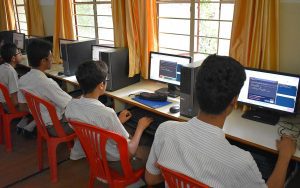
Computational Thinking and Artificial Intelligence are now compulsory modules in Classes 9 and 10 — not the elective subject they used to be. Students will encounter foundational AI literacy (what AI is, how it learns, what its limits and ethics are) and basic computational problem-solving (algorithms, decomposition, pattern recognition). For the present Class 6 cohort, AI is on track to become a board-examined subject by 2029 when that cohort reaches Class 10.
What This Means for Students Preparing for 2027 Boards
- Class 9 (current cohort): You are the first batch sitting the twice-yearly Class 10 board in 2027. Begin Phase 1 preparation now, not in December.
- Class 10 (current cohort): The 2026 cycle has already concluded under the previous pattern. Compartment cycle is the only remaining touchpoint with the old syllabus (see our guide on the July 2026 compartment exam).
- Class 11 (current cohort): The new Class 12 blueprint applies — including competency-based question patterns and case-study heavy papers.
- Parents: The Advanced Mathematics and Advanced Science papers are the single highest-leverage decision you will make in the 2026-27 year. Choose Advanced if your child is even considering JEE/NEET/CUET.
Question Pattern Shift — Competency-Based Assessment
The 2026-27 question papers shift further toward competency-based assessment: more MCQs, more assertion-reason, more case-based and source-based long answers, fewer pure-recall direct questions. Rote learning is now actively penalised by the blueprint. Active practice with NCERT exemplar, CBSE sample papers and full-length mock tests is no longer optional.
Where to Track the Official Updates
For the verified circulars and the latest version of the syllabus, refer to the CBSE Academics Unit page (cbseacademic.nic.in) and the main CBSE notifications portal (cbse.gov.in/cbsenew/examination_Circular.html). Avoid relying on social-media summaries — every fact in this article was cross-checked against the official 2026-27 circulars released in April 2026.
Frequently Asked Questions
When does the CBSE new curriculum 2026-27 take effect?
The CBSE 2026-27 curriculum takes effect from the start of the 2026-27 academic session (April 2026). The Class 9 and 10 revised curriculum was published on 2 April 2026 and the Class 11 and 12 curriculum on 1 April 2026.
Is the Class 10 board exam really going to be held twice in 2027?
Yes. The current Class 9 cohort will sit Phase 1 of the Class 10 board exam in February 2027 and Phase 2 in May 2027, with the higher score being retained.
Do I have to take the Advanced Mathematics or Advanced Science paper?
No. The Advanced paper is optional and is worth 25 additional marks. It is not added to the aggregate, but a score of 50% or above earns a separate notation on the Class 10 mark sheet — useful for competitive exam pathways.
What is the new three-language rule under CBSE 2026-27?
From Class 6, every student must study three languages, of which at least two must be Indian. The third language (R3) is now compulsory and is timetabled from the 2026-27 session.
Is Artificial Intelligence now compulsory in CBSE schools?
Computational Thinking and AI are compulsory modules in Classes 9 and 10 from 2026-27. AI is scheduled to become a board-examined subject by 2029 for the current Class 6 cohort when they reach Class 10.